


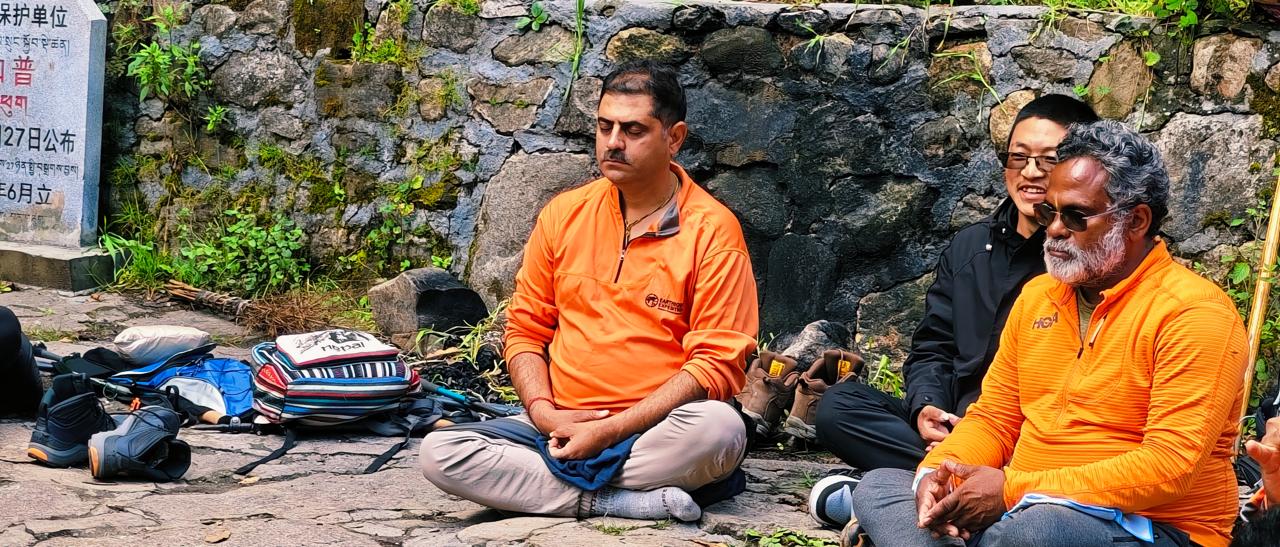
What is Sanatan Yoga - A Classical Yoga from Himalaya?
As conscious creatures, human beings started thinking about themselves ever since they evolved into Homo sapiens. They developed the concentration and quietness within themselves as they went internally rather than externally in the course of the thinking process. Maybe this came about by the simple act of staring into the fire or at the stars in the night sky, similar to the practices found in classical yoga, which encourages deep self-reflection and inner stillness.
They started going deeper into themselves, enjoying the eternal blissfulness they achieved from this inner concentration. As they discovered the ability to connect with their true selves, they repeated it time and again which helped them to open their inner consciousness. They enjoyed the peace and quiet of their inner world as it was an escape from the external pressures.
This mental concentration developed into a deep and intimate level that eventually took the form of meditation. This provided the solutions for the many everyday problems that they encountered.
The meaning of Yoga is to unite. To unite life to the universal consciousness changing the impure to pure, problem to solution, difficulty to smoothness makes the world joyful. This is the true meaning of yoga. A person who can accomplish this unity and practices regularly is called a Yogi.
With the practical implementation of the Yoga path the realization of the mysterious truth of life through Yoga practice was realized. Extensive research provided different experiences from different people. To bring all the experiences of different Yogis together they developed a variety of Yoga methods, rules and paths. They also developed the yoga diet to keep mind, body and soul pure and refreshed.
Different Yoga paths were developed but all of them ultimately aimed to achieve the same thing, a blissful and happy life. Yoga has travelled a long way over thousands of years to the present day. To bring Yoga to this place, many Yogis and Saints have contributed a lot through the Teacher/Student relationship. This is the authentic way of transferring the knowledge of Yoga and this is the true meaning of Traditional Yoga.
Living in the stressful and hectic life of the twenty first century, people from around the world have sought an escape and linked their life to Yoga or want to be connected. Yoga has reached every corner of the world from its origin in the East but the two important questions should be asked, “Is Yoga being taught the way it should be?” and “Is Yoga becoming too commercial and diverging from its authentic track?”.
These questions and others need serious answers. Yoga in the modern world has been developed as a fashionable form of exercise changing the fundamental essence of Yoga and downgrading its form. This watered down form of yoga, can bring fun and fitness to people for a while but they remain far from the real experience and benefits of Yoga.
There is a dilemma that people who want to practice the traditional and authentic system of Yoga do not know where to find a teacher in the traditional method. There are different types of Yoga to suit people of different abilities and interests. They can choose their perfect type of Yoga once they are able to recognize their true physical, mental, spiritual, emotional and social condition.
This makes self exploration very important when choosing to practice the right Yoga in the correct way. Taking all these things into consideration, we are committed to take Yoga ahead in its most traditional and authentic way without being diverted from its essence with our team of qualified and experienced Sanatan (Classical) Yoga practitioners and researchers.
ue meaning of yoga. A person who can accomplish this unity and practices regularly is called a Yogi. With the practical implementation of the Yoga path the realization of the mysterious truth of life through Yoga practice was realized. Extensive research provided different experiences from different people. To bring all the experiences of different Yogis together they developed a variety of Yoga methods, rules and paths. They also developed the yoga diet to keep mind, body and soul pure and refreshed.
Sanatan yoga is an ancient, holistic, and spiritual yoga that originated from the ancient Indian texts and teachings rooted in Sanatana Dharma (also known as Hinduism). The word Sanatana means eternal or timeless, and Yoga means union. Unlike modern yoga, sanatan yoga focuses on physical postures.Sanatan yoga teaches to attain the divin through self-discipline, devotion, knowledge, and selfless action.
Sanatan Yoga is based on classical Hatha yoga as outlined in the traditional texts, Hatha Pradapika and Gheranda Samhita, as well as traditional Ashtanga (8 Limbs of Yoga) outlined by Patanjali's Yoga Sutras.
Key Aspects of Sanatan Yoga:
Eight Limbs of Yoga (Ashtanga Yoga)
It follows Patanjali’s system, which includes:
1. Philosophical Foundation
Sanatan Yoga draws heavily from the spiritual wisdom of Sanatan Dharma, taking its teachings from the Vedic scriptures, including:
-
- The Vedas & Upanishads: These ancient texts contain profound spiritual knowledge about the nature of the self, the universe, and the ultimate reality (Brahman).
- The Bhagavad Gita: A sacred dialogue between Lord Krishna and Arjuna that teaches the essence of duty (dharma), selfless action (karma), and devotion (bhakti).
- Patanjali’s Yoga Sutras: A systematic guide to spiritual awakening through self-discipline, meditation, and ethical living.
- The ultimate goal of Sanatan Yoga is self-realization (moksha)—liberation from the cycle of birth and death, or samsara, into the unity of divine consciousness.
2. Ashtanga Yoga: Eight Limbs of Yoga
Patanjali's Ashtanga Yoga or Eightfold Path, gives an ordered setting to spiritual growth and self-discipline.
a. Yama (Moral Disciplines)
These are ethical laws that govern interaction with the world:
-
- Ahimsa (non-violence): Causing no harm to a living being in thought, word, or action.
- Satya: Speak and live the truth at all times.
- Asteya: Do not take what is not given to you.
- Brahmacharya: Be moderate; have self-restraint.
- Aparigraha: not to be greedy or attached to worldly things.
b. Niyama: Self-Purification and Discipline
The personal observances for inner purification
-
- Shaucha: purity of the body, mind, and surroundings.
- Santosh: gratitude and contentment within.
- Tapas: To build willpower through dedicated practice.
- Swadhyaya (self-study): The study of sacred scriptures and their reflections.
- Ishwar Pranidhana (Surrender to the Divine): Trust in the divine plan; let go of ego.
c. Asana (Postures)
-
- Physical postures to keep the body healthy, flexible, and stable.
- Initially, it was designed to prepare the body for long hours of meditation.
- This will help in balancing the energy centers (chakras) in the body.
d. Pranayama (Breath Control)
-
- Regulation of breath to control life force—Prana.
- Techniques like Nadi Shodhana (alternate nostril breathing) and Bhastrika (forceful breathing) purify the body and calm the mind.
e. Pratyahara (Withdrawal of Senses)
-
- To disengage from outside distractions and go within.
- As a process for inner awareness and stillness.
f. Dharana (Concentration)
-
- Training the mind to concentrate on one point-the mantra, breath, or deity.
- Develops tremendous clarity of mind and strength in depth.
g. Dhyana (Meditation)
-
- Unbroken and continuous meditation.
- It gives inner peace and heightened consciousness.
h. Samadhi (Spiritual Enlightenment)
-
- Oneness with the Divine is realized in that ultimate state.
- The ego is completely dissolved, leaving behind only pure consciousness.
3. Bhakti, Karma, and Jnana Yoga-Integration
As Yoga Sanatan makes sense of these various spiritual paths, knowing that different people have different natures:
a. Bhakti Yoga-Path of Devotion
-
- Love and self-surrender towards God through prayer, mantra chanting, and rituals.
- The various practices include the singing of bhajans, scriptures, and worship of deities.
b. Karma Yoga-Path of Selfless Action
-
- Doing one's duty without attachment to fruits.
- Advocates the service to humanity as Seva or as an act of worship.
c. Jnana Yoga: Path of Knowledge
-
- Self-realization to be attained through wisdom and profound introspection.
- Reading the scriptures, meditation, and self-inquiry through "Who am I?" enable liberation.
d. Pranayama & Meditation
-
- In Sanatan Yoga, both pranayama (breathing control) and meditation play an important role for a clear mind and spiritual awakening.
4. Pranayama and Meditation
Pranayama and meditation are important in Sanatan for mental clarity and to awaken the spirituality.
a. Pranayama: Breath Control Techniques
-
- Nadi Shodhana: Alternate nostril breathing; Cleans energy channels.
- Bhastrika (Bellows Breathing): energizes the body.
- Ujjayi (Ocean Breath): soothes the nervous system.
b. Meditation (Dhyana)
Gives mental stillness and spiritual awareness.
General techniques include:
-
- Mantra Meditation: Chanting "Om" or other holy sounds.
- Vipassana (mindfulness meditation): observation of thoughts and sensations.
-
- Trataka (Candle Gazing): Develops focus and intuition.
5. Holistic Lifestyle
Sanatan Yoga advocates a way of life for healthiness of body, mind, and spirit.
a. Sattvic (Pure) Diet
-
- Vegetarian, fresh, and natural foods that help increase vitality and inner peace.
- Tamasic food is heavy and dulling; rajasic food overstimulates.
b. Daily Spiritual Practices
-
- Morning prayer and meditation set a good tone for the day.
- Chant mantras, such as the Gayatri Mantra, for divine protection.
- Study of sacred texts for guidance and inspiration.
c. Ethical Living
-
- Practice truthfulness, compassion, and humility.
- Live in harmony with nature and the universe.
6. Connection with the Divine
While modern yoga is often secular and fitness-oriented, Sanatan Yoga is deeply spiritual. It recognizes that:
-
- Each being is a spark of the Divine.
- Living according to Dharma puts one in tune with cosmic laws.
- Pujas, kirtans, and pilgrimages are some of the practices that help deepen this divine connection.
Sanatan Yoga is not an activity of mere physical fitness but a way of living, stitching body, mind, and soul together. The teachings of Sanatan Yoga and its practice can take one toward inner peace, self-mastery, and eventually toward liberation-moksha.
FAQ on Sanatan Yoga
What is Sanatan Yoga?
Sanatan Yoga means the eternal union — it is the ancient and timeless system of yoga that originates from Sanatan Dharma (Hinduism).
It refers to the spiritual discipline that aligns body, mind, and soul with the eternal truth (Sanatan Satya) and the Divine (Brahman).
It is not just physical exercise, but a way of living in harmony with dharma, nature, and the inner Self.
What are the Yogas in Sanatan Dharma?
In Sanatan Dharma, yoga is the path to spiritual realization. The main yogas are:
-
Karma Yoga – Path of selfless action and duty.
-
Bhakti Yoga – Path of devotion and love for God.
-
Jnana Yoga – Path of knowledge and wisdom.
-
Raja Yoga – Path of meditation and control of the mind.
These four are often called the Maha Yogas (great paths).
What is the 21-Day Yoga Sadhana?
A 21-day Yoga Sadhana is a spiritual practice done continuously for 21 days to build discipline, purify the body-mind, and establish a routine of yoga and meditation.
It usually includes:
-
Daily asana (postures)
-
Pranayama (breath control)
-
Dhyana (meditation)
-
Mantra chanting or japa
-
Sattvic diet and mindful living
The number 21 is symbolic of transformation — it’s believed consistent practice for 21 days helps build a lasting spiritual habit.
What are the 4 Major Types of Yoga?
According to the Bhagavad Gita and Sanatan tradition:
-
Karma Yoga – Yoga of action.
-
Bhakti Yoga – Yoga of devotion.
-
Jnana Yoga – Yoga of knowledge.
-
Raja Yoga – Yoga of meditation and mind control.
All four ultimately lead to moksha (liberation).
What are the 5 Rules of Sanatan Dharma?
The core five rules (principles) of Sanatan Dharma** are:
-
Ahimsa – Non-violence and compassion.
-
Satya – Truthfulness.
-
Asteya – Non-stealing.
-
Brahmacharya – Control of senses / purity.
-
Aparigraha – Non-possessiveness or simplicity.
These align with Yamas in Patanjali Yoga Sutras.
What are the 4 Pillars of Sanatan Dharma?
The four pillars (Chatur Varna or Chatur Ashrama Dharma) are:
-
Dharma – Righteousness or duty.
-
Artha – Prosperity and material well-being.
-
Kama – Desires and emotional fulfillment.
-
Moksha – Liberation or spiritual freedom.
These guide a balanced and meaningful life.
What are the 5 Elements of Sanatan Dharma?
The five elements (Pancha Mahabhutas) are the foundation of all creation:
-
Prithvi (Earth)
-
Apah (Water)
-
Tejas (Fire)
-
Vayu (Air)
-
Akasha (Ether/Space)
These elements exist both in nature and within the human body.
What are the 4 Goals of Sanatan Dharma?
The four Purusharthas (goals of human life) are:
-
Dharma – Living righteously.
-
Artha – Earning and managing wealth ethically.
-
Kama – Fulfilling desires responsibly.
-
Moksha – Attaining liberation from the cycle of birth and death.
These goals help maintain harmony between material and spiritual life.